UN BUEN PROFESIONAL . PRECISA DE UNA BUENA DOCUMENTACION TECNICA.

Para la compra de cuaquier libro de este blogg puede mandar un correo electronico a info@ingenieriayarte.com o a traves de nuestra pagina web. www.ingenieriayarte.com indicandonos nombre, direccion, poblacion y telefono de contacto .Dentro de España los envios son realizados por mensajeria 24 horas a cargo de MRW. Canarias y Ceuta los envios son por Correos España mediante Paquete Azu

Para cualquier envio Internacional los envios son por Agencia de transporte a su domicilio.Puede efectuar su pedido a traves de www.ingenieriayarte.com de forma comoda calcula los gastos de envio


lunes, 11 de marzo de 2013

MANUAL DE EQUIPOS DE DESESCOMBRO DE TUNELES


ingenieria_arte: Manual de equipos de desescombro de túneles


Manual de equipos de desescombro de túneles  
Autor: López Jimeno,Carlos
  • Páginas: 460
  • Tamaño: 17x24
  • Edición: 1ª
  • Idioma: español
  • Año: 2013
  • 46,80 Euros   
  •  
SI LO DESEA PUEDE EFECTUAR SU PEDIDO A TRAVES DE NUESTRA PAGINA
WEB www.ingenieriayarte.com . ENVIOS TANTO NACIONALES E INTERNACIONALES

En la construcción de tuneles,de cavernas,de pozos y otra serie de obras subterraneas, se generan grandes cantidades de escombros,suelos y rocas fragmentadas que requieren su extraccion al exterior y su vertido en depositos diseñados para garantizar su estabilidad a largo plazo y su integracion en el medio,salvo que exista una demanda de dichos materiales en las cercanias y se contemple la reutilizacion de los mismos
En la antiguedad en las primeras excavaciones efectuadas por el hombre,el desescombro se realizaba de manera manual. Posteriormente, en las obras de mayores dimensiones se introdujo la fuerza animal,para seguidamente llegar una mecanizacion de dichas operaciones mediente la introduccion de la maquina de vapor,los equipos neumaticos,los de accionamiento diesel y finalmente los electricos.
En general,las operaciones de carga y transporte ocupan aproximadamente la cuarta parte del tiempo del ciclo de avance,razon por la cual es muy importante optimizar los rendimientos de desescombro.
La reciente ejecucion de tunels de gran longitud ente 10 y 50 km,hace que las operaciones de desescombro tengan una mayor importancia dentro de lo que es en si la propia tecnica constructiva.
Esto significa que la evacuacion del escombro generado por la tecnica de excavacion debe realizarse a un ritmo acompasado con el avance pues de lo contrario puede llegar a constituir un factor limitante.No hay que olvidar,ademas que algunos de los equipos de arranque lo son simultaneamente de carga.
Por otro lado debido a las grandes distancias de transporte el impacto economico en el conjunto de las obras han pasado a tener cada vez mas
importancia,lo que aconseja en algunos proyectos a contemplar no solo la extraccion vertical de pozos situados estrategicamente a lo largo del trazado de los tuneles,razon esta por la que se hace una mencion especial a estas tecnicas en un capitulo aparte
En los capitulos que comprende este manual se aborda la descripcion de los principales equipos de carga y de transporte tanto ciclicos como continuos,sus componentes basicos,su caracteristas basicas y la forma de trabajo de los rendimientos y costes horarios de funcionamiento para terminar la obra con la descripcion de los equipos empleados en el desescombro de las obras verticales subterraneas como son los pozos que cada dia estan mas presentes en los grandes proyectos de tuneles
Este texto constituye para los profesionales de la ingenieria de tuneles un medio de puesta al dia,pues se ha pretendio hacer una revision y descripcion exhaustiva de toda la maquinaria existente y para los alumnos que inician sus primeros pasos en este apasionante campo de la ingenieria.

Indice
Introduccion
 - Desescombro en el metodo clasico de perforacion y voladura
 - Desescombro en los metodos de excavacion con tuneladoras
 - Factores que influyen en la seleccion de equipos de desescombro
    Seccion de los tuneles
    Otros factores condicionantes
-  Vertido en escombreras y reciclado de esteriles procedentes de la excavacion de tuneles
- Estimacion de redimientos y costes
    Introduccion
    Analisis del trabajo a realizar
        Componentes de tiempo del ciclo de trabajo
        Factores de eficiencia y organizacion
        Factores de esponjamiento y densidades
        Compactacion
        Capacidad nominal del equipo
    Potencias y fuerzas motrices de los equipos moviles
        Elementos que proporcionan potencia
        Factores limitadores del rendimiento
             Resistencia a la rodadura
             Resistencia a la pendiente
             Peso
             Traccion
             Altitud
       Curvas caracteristicas
       Factores de velocidad
       Producciones horarias de los equipos de carga
             Capacidad de los cazos y factores de llenado
             Tiempos de ciclo y factores de correccion
       Producciones horarias de los volquetes
             Tiempos fijos de carga,maniobras y descarga y esperas
             Tiempos variables
             Equilibrio entre el tamaño de los volquetes y los equipos de carga
             Dimensionamiento de la flota de volquetes
       Calculos de los costes horarios
          Introduccion
          Costes de propiedad
          Amortizacion
          Terminos utilizados en la amortizacion de los equipos
          Metodos de amortizacion
          Vidas utiles de los equipos y valores residuales
          Cargas indirectas
       Coste horario de operacion
          Coste de combustible y energia
          Coste de lubricantes,grasas y filtros
          Coste de elementos de desgaste
          Costes de neumaticos o tren de rodaje
          Costes de reparaciones
          Costes del operador
        Coste total de operacion
        Modelo tecnico de palas LHD
          Modelo economico de costes de capital y de operacion
          Produccion de las palas LHD
            Tiempo de ciclo de trabajo
            Estimacion del tiempo de desescombro y distancia
            Abacos de calculo de rendimiento de carga y transporte
         Ejemplo de rendimientos y costes de flotas de equipos de carga y
         transporte en el desescombro de tuneles
            Volumen a desescombrar
            Tiempo fijo de ciclo
            Rendimientos de los equipos de carga
            Ejemplo 1
            Ejemplo 2
      
         Equipos de carga
         Introduccion
         Cargadoras de volteo posterior
            Produccion teorica
            Produccion real
            Produccion maxima
            Produccion bruta
         Palas conway
         Cargadora de brazos recolectores
         Retroexcavadoras con descarga central
         Excavadoras hidraulicas
            Bastidor
            Motores
            Transmision
            Bombas hidraulica
            Tren de rodaje
            Cabina
            Pluma o brazo
            Cuchara y otros implementos de trabajo      
            Fuerzas actuantes durantes del trabajo de las excavadores
         Palas cargadoras sobre neumaticos y sobre orugas
            Bastidor
            Motor
            Transmision
            Sistemas hidraulicos
            Equipo de trabajo
            Cazo
            Cabina
            Neumaticos y tren de orugas
            Fuerzas actuantes durante el procedimiento de carga
            Practica operativa
            Consideraciones en la seleccion
            Palas de orugas de descarga lateral
        
          Equipos de transporte
          Introduccion
          Camiones y volquetes
             Bastidor
             Motor
             Transmision
             Tren de rodaje
             Caja
             Cabina
             Volquetes de bajo perfil
             Practica operativa
             Volquetes especiales
             Camiones basculantes
          Vehiculos lanzadera
          Cintas transportadoras
             Bastidores
             Cabezas motrices
             Dispositivosde tensado
             Bandas
          Dimensionamiento de las cintas transportadoras
             Tablas de capacidad de cintas
              Angulos de carga
              Tamaño maximo del bloque
              Angulos de artesa
              Velocidad de las cintas
              Angulos de inclinacion
              Calculo de la potencia de accionamiento
              Cintas transportadoras no convencionales
              Practica operativa
              Aplicaciones
          Transportadores blindados
          Trituradoras moviles en el avance de tuneles
              Machacadoras horizontales sobre panzer
              Tuneles para la autopista de Engelberg
              Tuneles para el ferrocarril de Lötschberg Norte
              Tuneles de San Gotardo,Tramo 252 DE Amsteg
              Tuneles de San Gotardo,Tramo 360 de Sedrun
              Machacadoras de rodillos de dimensionamiento
         Transporte sobre via
              Introduccion
              Breve reseña historica del transporte sobre via
              Dinamica del tren
              Resistencia al avance
              Resistencia a la rodadura
              Resistencia debidas al rozamiento de la cajas de grasa
              Resistencia del aire
              Accion del viento lateral
              Resistencia locales
              Resistencia por accion de la pendiente
              Resistencia de la curva
              Resistencias de aceleracion o de inercia
              Resistencias globales al movimiento
              Datos practicos para la formulacion de trenes utilizados
              en mineria y tuneles
              Esfuerzos de traccion y frenado
              Esfuerzo de traccion
              Esfuerzo de frenado
              Distancia de frenado
              Fenomeno de adherencia
              Correspondencia de la adherencia en la traccion y en el
              frenado
              Material rodante
              Locomotoras de bateria
              Locomotoras Trolley
              Locomotoras Diesel
              Tandem
              Vagones
                 Sistemas de descarga de vagones
                 Vagones mineros especiales
                 Vagones tuneleros
              Parametros principales para la eleccion de las locomotoras
                 Especificaciones basicas
                 Sistemas de frenado
                 Frenado directo
                 Frenado indirecto
             Via
             Carriles
                Esfuerzos sobre las vias
                Tipos de carriles
            Uniones entre carriles
                Eclisas
                Fijaciones
                Traviesas
                Material de las traviesas
                Apoyo de via
                Aparatos de via
             Nuevos desarrollos en locomotoras
             Tren sobre neumaticos
             Ejemplos de calculo
             Ejemplo 1
             Ejemplo 2
             Ejemplo 3
             Ejemplo 4
             Ejemplo 5
             Ejemplo 6
        Transporte hidraulico por tuberia
             Tipos de excavaciones con bombeo de escombros
             Excavacion con hidroescudos
             Equipos para microtunelacion
             Excavacion de pozos
             Excavacion con rozadoras
             Caracteristicas de los solidos a transportar
             Hidraulica de los lodos
             Equipos de bombeo
                Bombas
                Tuberias
                Equipos auxiliares
                Practica operativa
                Caso practico
         Equipos para el desecombro vertical
            Introduccion
            Profundizacion de pozos verticales
                Metodo de excavacion con perforacion y voladura
                Metodo de excavacion mecanica
                Desescombro en el ensanchamiento mecanico de pozos
         Profundizacion de pozos inclinados
         Evacuacion de escombros a traves de pozos verticales profundos
                Castillete,torre de extraccion o excavacion subterranea
                Elementos de transporte: jaula o skip
                Sistema de guinaje
         
                Señalizacion
                Un caso practico. Tunel de San Gotardo
          Evacuacion de escombros a traves de pozos verticales poco
          profundos
                Introduccion
                Profundizacion de pozos verticales
                   Metodos de excavacion con perforacion y voladura
                   Metodo de excavacion mecanica
                   Desescombro en el ensanchamiento mecanico de pozos
               Profundizacion de pozos inclinados
               Evacuacion de escombros a traves de pozos verticales profundos
                   Castillete,torre de extraccion o excavacion subterranea
                   Elementos de transporte:jaula o skip
                   Sistema de guionaje
                   Maquinas de extraccion
                   Cables de extraccion
                   Embarques
                   Señalizacion
                   Un caso practico. Tunel de San Gotardo
                Evacuacion de escombros a traves de pozos verticales poco profundos

martes, 5 de marzo de 2013

CURSO DE DEPOSITOS DE RETENCION DE AGUAS PLUVIALES


CURSO DE DEPOSITOS DE RETENCION DE AGUAS PLUVIALES
Manuel Gomez Valentin

Curso de depósitos de retención de aguas pluviales
Este libro pretende revisar alguno de estos problemas, proporcionando soluciones iniciales de prediseño, así como de diseño y cálculo definitivo, tanto en aspectos de protección de inundaciones como de protección de vertidos, para enmarcar la solución depósito en sus justos términos frente a otras alternativas más tradicionales.

Sinopsis:

La posibilidad de recurrir a un depósito de retención como elemento de solución de los problemas de inundación de un municipio, o para mitigar los problemas de contaminación derivados del vertido en tiempo de lluvia desde la red de alcantarillado es ya hoy en día moneda común entre los técnicos implicados en los temas de drenaje urbano. Sin embargo, la experiencia sobre sus criterios de diseño, operación, e incluso sobre las dimensiones mínimas adecuadas para que el depósito sea efectivo, todavía hoy no es lo suficientemente amplia y se suscitan dudas o desconocimiento cuando se empieza a poner manos a la obra a la hora de diseñar o realizar el cálculo hidráulico del depósito

Índice:
  1. El depósito de retención, una alternativa de solución del problema de inundación en medio urbano
  2. Predimensionamiento de depósitos de retención en redes de alcantarillado
  3. Cálculo hidráulico de depósitos de retención
  4. Depósitos de retención anticontaminación. Criterios de disño y operación
  5. Ejemplos de depósitos y balsas de retención
  6. Caso de estudio: modelo de depósito de laminación y anticontaminación en la cabecera de la EDAR de Reus
Observacion  2010
Medidas 17x24
Paginas
Precio  32,00 Euros


PEDESTRIAN BRIDGES RAMPS WALKWAYS STRUCTURES


PEDESTRIAN BRIDGES RAMPS WALKWAYS STRUCTURES
Andreas Keil

Ramps, walkways, structures
Creating integrated connections

Pedestrian bridges need to be above all functional, but beyond this they should also relate to that which makes a location special, to its pathways, topography and context. Through their presence in the public realm, they offer the opportunity of not only connecting areas separated from each other, but also of giving a place its own identity. To draft a good pedestrian bridge, a great deal of design sensitivity is required, particularly when the bridge is being built in an inner-city area or in a sensitive landscape.But since less restrictive functional and structural requirements apply to pedestrian bridges than to road or rail bridges, pedestrian bridges offer the required design latitude for reacting to the place and use with individual solutions.
The book at hand provides an overview of current tendencies in pedestrian bridge construction, of fundamental structural and functional requirements, of the various load-bearing systems, of application areas of the various materials and of important economic aspects. Successful real-life examples round out the volume and are meant to provide motivation to make fascinating designs a reality in interdisciplinary collaboration.

• Fundamental knowledge ranging from design to structural support systems, from spatial installations to hanging rope constructions
• Materials for the various design principles provide inspiration and guidance when you put them into practice
• Successful project examples in urban and natural environments

Indice

Introduction
Functional requirements
Bridge width
Clearance gauge
Route layout and access
Railings
Surfaces

Statics and dynamics
Statics
Dynamics

Materials
Wood
Stone
Concrete
Steel
Aluminium
Glass
CFR/GFR

Design and construction
Design
Definitions of terms
Arch bridges
Beam and slab bridges
Truss bridges
Suspension Bridges
Stress ribbon Bridges
Curved bridges

Finishing
Surfaces
Railings
Furniture
Expansion joints
Drainage
Bearings
Lighting

Ecomics aspects
Construction principles
Costs
Life cycle considerations
Costs
Life cycle considerations
Cost calculations

Special pedestrian bridges
Movable bridges
Closed bridges
Plattforms

Examples of projects
Completed pedestrian bridges

Appendices
Literature,standards
Picture credits
Index

Observaciones 2013
Medidas 21x30
Paginas 112
Precio 57,00 Euros


lunes, 4 de marzo de 2013

DESIGN OF PILE FOUNDATIONS IN LIQUEFIABLE SOILS


DESIGN OF PILE FOUNDATIONS IN PILE FOUNDATIONS IN LIQUEFIABLE SOILS
Gopal Madabhushi (University of Cambridge, UK) By (author):
Jonathan Knappett (University of Dundee, UK) By (author):
Stuart Haigh (University of Cambridge, UK)

Pile foundations are the most common form of deep foundations that are used both onshore and offshore to transfer large superstructural loads into competent soil strata. This book provides many case histories of failure of pile foundations due to earthquake loading and soil liquefaction. Based on the observed case histories, the possible mechanisms of failure of the pile foundations are postulated. The book also deals with the additional loading attracted by piles in liquefiable soils due to lateral spreading of sloping ground. Recent research at Cambridge forms the backbone of this book with the design methodologies being developed directly based on quantified centrifuge test results and numerical analysis.
The book provides designers and practicing civil engineers with a sound knowledge of pile behaviour in liquefiable soils and easy-to-use methods to design pile foundations in seismic regions. For graduate students and researchers, it brings together the latest research findings on pile foundations in a way that is relevant to geotechnical practice.
The Design of Pile Foundations in Liquefiable Soils
provides a systematic evaluation of the effects of liquefaction on pile foundations and includes earthquake observations, research findings, and design principles and procedures from a variety of sources worldwide.

The book provides a logical framework for understanding the basics of single pile and pile group design, liquefaction, and the effects of earthquake loading and liquefaction on the axial and lateral loads transmitted to pile foundations. It also provides a framework for understanding the effects
that loss of bearing and lateral restraint in saturated sandy soils subject to cyclic loading have on the capacity of pile foundations. By combining earthquake loading in liquefiable soils with mechanisms that reduce pile capacity, the book develops a rational process for quantifying loads and capacity reduction into a design process.
Pile response to earthquakes and liquefaction involves complexmaterial behavior in terms of increased pore pressure and reduced soil strength and stiffness, complex mass behavior of the ground in terms of kinematic loading, complex performance of the superstructure in terms of inertial loads transmitted to the piles, and complex interaction between the soil and pile foundation. This book provides a valuable guide forstudents, researchers, and designers in navigating these complexities.
Chapter 1 focuses on the performance of pile foundations with a review of factors contributing to axial pile capacity, performance-based design principles for piles subject to earthquakes, and the observed performance of pile foundations during previous earthquakes.
Chapter 2 reviews inertial and kinematic loading, and presents the essentials of
p-y analysis and limit equilibrium methods to estimate the maximum shear and moment in piles in laterally spreading soils.
Chapter 3 covers factors affecting the axial loading of piles in liquefiable soils, includingreduction in end-bearing capacity due to elevated pore pressures and thepotential for beam buckling associated with the loss of lateral restraint in liquefying soils.
Chapter 4 focuses on lateral spreading in liquefied soils, including empirical methods for estimating lateral spread movement, soil-pile interaction in liquefied soil, and limiting lateral earth pressuresfor pile design.
Chapter 5 evaluates combined axial and lateral pile loading effects in laterally spreading ground with a treatment of single pile and pile group behaviour and the use of interaction diagrams toanalyse pile performance when multiple failure mechanisms are possible.
Chapter 6 provides a substantial number of design examples to illustrate the design procedures developed in the book.
The Design of Pile Foundations in Liquefiable Soils
also demonstrates the importance of centrifuge testing to identify and quantify key failure mechanisms associated with complex soil-structure interaction. The combined use of careful field observations, centrifuge experiments and fundamental mechanics to develop analytical procedures and a structured design process is well illustrated by this book. The provision of design examples is a particularly attractive feature. The worked examples show explicitly how to apply the design process, and provide an indispensible link between theory and practice.
The Design of Pile Foundations in Liquefiable Soils providessubstantial forward progress in conceptualising and formalising the analytical and design treatment of the truly complex, and sometimes vexing, phenomena associated with pile response to earthquake loading and liquefaction. For those interested in liquefaction, liquefactioninduced soil-structure interaction, pile design, and centrifuge testing, this book will be a valuable and frequently used addition to their technical library.

Contents:
  • Performance of Pile Foundations
  • Inertial and Kinematic Loading
  • Accounting for Axial Loading in Level Ground
  • Lateral Spreading of Sloping Ground
  • Axial Loading on Piles in Laterally Spreading Ground
  • Design Examples

Observaciones 2011
Paginas 209
Precio  110,00 Euros


viernes, 1 de marzo de 2013

ATLAS DE DETALLES CONSTRUCTIVOS REHABILITACION

9788425224706_06_x
ATLAS DE DETALLES CONSTRUCTIVOS. REHABILITACION


Atlas de detalles constructivos de Peter Beinhauer se ha convertido en una guía de referencia fundamental a la hora de elaborar la documentación de la fase de ejecución de un proyecto arquitectónico. Como complemento al primer volumen, este segundo libro recopila cerca de 200 detalles constructivos que afectan a la rehabilitación de edificios existentes.
En gran medida, la calidad de los proyectos de ejecución viene dada por la precisión del dibujo de los detalles constructivos. Centrándose esta vez en la rehabilitación de deficiencias y patologías de los edificios, Beinhauer proporciona en estas páginas una valiosa herramienta de consulta que servirá de ayuda para especificar en detalle el modo de colocación de materiales, elaborar las mediciones y el dimensionado de los elementos constructivos y, en general, para redactar toda la documentación de un proyecto de ejecución. Cada ficha corresponde al dibujo de un detalle constructivo realizado a escala 1:10 o 1:5. Para facilitar una búsqueda rápida y eficaz, las fichas se han organizado en ocho temas: cimentaciones, cerramientos exteriores, paredes interiores, ventanas y puertas, forjados, balcones, escaleras y cubiertas.
Una guía técnica destinada a arquitectos, ingenieros, estudiantes y profesionales del sector de la construcción.
Peter Beinhauer es arquitecto por la Escuela de Arquitectura de Stuttgart. Con despacho propio en Leipzig, su actividad se centra fundamentalmente en la construcción de viviendas, hospitales y residencias, además de ofrecer servicios de asesoría en fases de detalle y ejecución
 

Índice de contenidos
 
Leyenda de los dibujos
Detalles
 
Cimentaciones
Cimientos
Recalces
 
Cerramientos exteriores
Cerramientos en contacto con el terreno
Cerramientos a nivel del terreno
Revestimientos de cerramientos exteriores
 
Paredes interiores
Paredes interiores de una hoja
Paredes interiores de varias hojas
Trasdosados
 
Ventanas y puertas
Ventanas
Puertas
 
Forjados
Estructuras de forjados
Forjados de zonas habitadas
Forjados de zonas húmedas
Suelos elevados
Revestimientos de techos
Falsos techos
 
Balcones
 
Escaleras
 
Cubiertas
Cubiertas inclinadas
Cubiertas planas
 
Anexo
 
Bibliografía
 
 
Observaciones 2013
Medidas 21x30
Paginas 248
Euros. 39,90
 

jueves, 14 de febrero de 2013

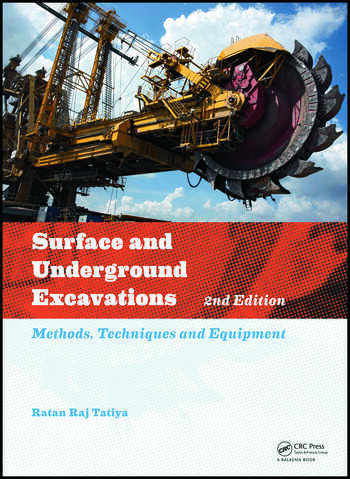
SURFACE AND UNDERGROUND EXCAVATIONS


SURFACE AND UNDERGROUND EXCAVATIONS
Methods, Techniques and Equipment
Ratan Raj Tatiya

Excavation is a multi-disciplinary activity in the areas of civil, construction and mining engineering. The excavation industry is booming because of the yearly creation of thousands of kilometers of tunnels, many mine openings and millions of cubic meters of large underground excavations for transportation, mineral mining, oil and gas storage, hydroelectric power station construction, defense facilities and for the disposal of hazardous waste.
Surface and Underground Excavations – Methods, Techniques and Equipment provides a comprehensive text on the latest technologies and developments in excavation for any type of surface or underground excavation. In the first few chapters, unit operations are covered, including drilling, explosives and blasting, mucking, haulage, hoisting, supports and reinforcement. Subsequently, excavation techniques are described for various operations, like tunneling, raising, sinking, drifting, stoping, quarrying and surface-mining, underground mining, pillar blasting and liquidation. In addition, the design, planning and development of excavations are treated in a separate chapter. Special attention is paid to the construction of surface and subsurface excavations, including caverns and to new methodologies to select stoping methods through incremental analysis. For practical illustration, the final chapter contains case studies dealing with heavy underground blasting during pillar recoveries.
This expanded second edition has been wholly revised, removing obsolete information and including latest trends and best practices as well as questions at the end of each chapter. It is now fully up-to-date and even more appealing to students and those with a general or professional interest in surface and underground excavations. As such, this book is particularly suited to students in earth sciences, geology and in civil, mining and construction engineering.

Preface
Conversion tables
Introduction

Excavations and their classification
Surface excavations
Underground excavations
Importance of minerals and brief history to recover them
Current status of mineral industry
Excavation technologies/systems – development & growth
Unique features of mineral industry
Brief history civil work excavations including tunneling
Current scenario
Tomorrow’s mine & civil excavations
Way forward
References

Rocks and Minerals

Formation process and classification
Rock cycle & type of deposits
Texture, grain size and shape
The concepts of mineral resources and reserves; mineral inventory, cutoff grade, and ores
Geological structures
Physical & mechanical characteristics of ores and rocks
Some other properties/characteristics
Related terms – rock and mineral deposits
References

Prospecting, Exploration & Site Investigations

Introduction
Prospecting and exploration
Phases of prospecting and exploration program
Site investigations for civil constructions, or any excavation project including tunnels and caverns
Rocks and ground characterization
Rock quality designation (rqd)
References

Drilling

Introduction – unit operations
Primary rock breaking
Drilling
Operating components of the drilling system
Mechanics of rock penetration
Rock drill classification
Motive power of rock drills
Drilling accessories
Selection of drill
Drilling postures
References

Explosives and Blasting

Introduction – explosives
Detonation and deflagration
Common ingredients of explosives
Classification of explosives
Blasting properties of explosives
Explosive initiating devices/systems
Explosive charging techniques
Blasting accessories
Firing systems – classification
Ground blasting techniques
Secondary breaking
Use, handling, transportation and storage of explosives
Explosive selection
Blasting theory
Drilling and blasting performance
References

Mucking, Casting and Excavation

Introduction
Muck characteristics
Classification
Underground mucking units
ARM loaders
Scrapers
Mucking in tunnels
Surface – excavation, loading and casting units
Wheel loaders – front end loaders
Backhoe
Hydraulic excavators
Shovel
Dragline
Multi bucket excavators
Bucket chain excavator (BCE)
Bucket wheel excavator (BWE)
Calculations for selection of shovel/excavator
Total cost calculations
Governing factors for the selection of mucking equipment
References

Transportation – Haulage and Hoisting

Introduction
Haulage system
Trackless or tyred haulage system
Conveyor system
Belt conveyors
Hoisting or winding system
Aerial ropeway
Ropes
Track and mine car
References

Supports

Introduction – necessity of supports
Classification of supports
Self support by in-place (in-situ) rock
Selection of support
Effect of ore extraction upon displacement of country rock and surface
References

Drives and Tunnels (Conventional Methods)

Introduction – function of drives and tunnels
Drivage techniques (for drives and tunnels)
Drivage techniques with the aid of explosives
Muck disposal and handling (mucking and transportation)
Ventilation
Working cycle (including auxiliary operations)
Driving large sized drives/tunnels in tough rocks
Conventional tunneling methods: tunneling through the soft ground and soft rocks
Supports for tunnels and mine openings
Driving without aid of explosives
Pre-cursor or prior to driving civil tunnels
References

Tunneling By Roadheaders and Impact Hammers

Tunneling by boom mounted roadheaders
Classification boom mounted roadheaders
Milling or longitudinal (augur) roadheaders
Classification based on weight
Advantages of roadheaders
Important developments
Procedure of driving by the heading machines
Auxiliary operations
Hydraulic impact hammer tunneling
Excavation procedure and cycle of operations
Merit and limitations
Partial face rotary rock tunneling machines
Excavators
Excavator with multiple tool miner (MTM) attachments
References

Full-Face Tunnel Borers (Tbms) & Special Methods

Introduction
Tunneling methods and procedures
Full face tunneling machines
Mini tunnel borers
Boring system
Rock cutting tools and their types
TBM Performance
Size of unit and its overall length including its trailing gear
Backup system/activities
tbms for soft ground/formations
Phases of tunneling project
Future technology
New Austrian tunneling method (NATM)
Tunneling through the abnormal or difficult ground, using special methods
Cut and cover method of tunneling
Submerged tubes/tunnels
References

Planning

Economical studies
Mine design elements
Dividing property for the purpose of underground mining
Mine planning duration
Mine development – Introduction
Access to deposit or means of mine access
System – opening up a deposit
Positioning and developing the main haulage levels
Size and shape of mine openings and tunnels
Pit top layouts
Pit bottom layouts
Structures concerning pit bottom layouts
References

Excavations in Upward Direction – Raising

Introduction
Raises’ applications in civil and construction industries
Classification – types of raises for mines
Raise driving techniques
Conventional raising method: open raising
Conventional raising method: raising by compartment
Raising by the use of mechanical climbers: jora hoist
Raising by mechanical climbers: alimak raise climber
Blasthole raising method: long-hole raising
Blasthole raising method: drop raising
Raising by the application of raise borers
Raise boring in a package – borpak
Ore pass/waste rock pass
References

Shaft Sinking

Introduction
Location
Preparatory work required
Sinking appliances, equipment and services
Sinking methods and procedure
Reaching up to the rock head
Sinking through the rock
Special methods of shaft sinking
Piling system
Caisson method
Special methods by temporary or permanent isolation of water
The freezing process
Shaft drilling and boring
Safety in sinking shafts
References

Large Sub-Surface Excavations

Introduction
Caverns
Powerhouse caverns
Oil storage caverns
Repository
Salt cavern storage
Aquifer storage
Exhibition hall caverns
Underground chambers in mines
Equipment and services selection
References

Underground Mining/Stoping Methods

Introduction
Open stoping methods
Supported stoping methods
Caving methods
Common aspects
Mine liquidation
Planning for mine closure
References

Surface Excavations

Introduction – surface mining methods
Open pit mining
Haul roads
Ramp and its gradient
Open cast mining/strip mining
Quarrying methods/techniques
The diamond belt saw
Earth movers
References
Subject index

Hazards, Occupational Health and Safety (Ohs), Environment and Loss Prevention

Introduction
Excavations’ Potential Hazards
Safety
Occupational Health and Surveillance
Environment Degradation and Mitigation Measures
Loss Prevention
Way Forward
Questions
References

Sustainable Development

Sustainable Development (SD) in Mining
Stakeholders and Sustainable Development
Scenarios Influencing Mining Industry
Is Mining Industry Equipped to Meet Challenges?
Proposed strategy to run mines economically viable (beneficial) i.e. implementation of cost-effective systems and best practices.
Measures for SD through improvements environmentally, socially and ethically
Legal compliances and Mining Policy
Quality of Human Resources
The Ultimate Goal - Way Forward
Way forward: Proposed milestones / strategy
Questions
References

Observaciones 2013
Medidas 17x24
Paginas  846
Precio  140,00     A la venta en Marzo 2013

OPEN PIT MINE PLANNING & DESIGN


Large Image

OPEN PIT MINE PLANNING & DESIGN
William A. Hustrulid, Mark Kuchta, Randall K. Martin

Open Pit Mine Planning and Design is an outstanding textbook designed for courses in surface mine design, open pit design, geological excavation engineering, and advanced open pit mine planning and design. The step-by-step introduction to mine design and planning enables a fast-track approach to the matter by undergraduate and graduate students. The excellent, user-friendly software guides the student through the planning and design steps, and the drillhole data sets allow the student to practice the described principles in various mining properties case examples. The large number of illustrative examples and case studies, together with the exercises and the reference lists at the end of each chapter, provide the student with all the material needed to study effectively the theory and application methods of open pit mine planning and design.
Volume One: Fundamentals covers the fundamental concepts involved in the planning and design of open pit mines. Subjects covered include mine planning, mining revenues and costs, orebody description, geometrical considerations, pit limits, production planning, mineral resources and ore reserves, responsible mining, blasting, drilling, loading, hauling and equipment availability, and utilization.
Volume Two: CSMine Software Package deals with CSMine, a user-friendly mine planning and design software that was developed specifically to illustrate the principles involved when applied in practice. It includes CSMine software, a CSMine tutorial, MicroModel user's guide and tutorial and various orebody case examples.
Although intended as student course material, many practitioners have used it as a practical reference guide. This third edition has been wholly revised, updated, and significantly expanded.

1 MINE PLANNING
1.1 Introduction
1.2 Mine development phases
1.3 An initial data collection checklist
1.4 The planning phase
1.5 Planning costs
1.6 Accuracy of estimates
1.7 Feasibility study preparation
1.8 Critical path representation
1.9 Mine reclamation
1.10 Environmental planning procedures
1.11 A sample list of project permits and approvals
References
Review questions and exercises

2 MINING REVENUES AND COSTS

2.1 Introduction
2.2 Economic concepts including cash flow
2.3 Estimating revenues
2.4 Estimating costs
References
Review questions and exercises

3 OREBODY DESCRIPTION

3.1 Introduction
3.2 Mine maps
3.3 Geologic information
3.4 Compositing and tonnage factor calculations
3.5 Method of vertical sections
3.6 Method of vertical sections (grade contours)
3.7 The method of horizontal sections
3.8 Block models
3.9 Statistical basis for grade assignment
3.10 Kriging
References
Review questions and exercises

4 GEOMETRICAL CONSIDERATIONS

4.1 Introduction
4.2 Basic bench geometry
4.3 Ore access
4.4 The pit expansion process
4.5 Pit slope geometry
4.6 Final pit slope angles
4.7 Plan representation of bench geometry
4.8 Addition of a road
4.9 Road construction
4.10 Stripping ratios
4.11 Geometric sequencing
4.12 Summary
References
Review questions and exercises
5 PIT LIMITS
5.1 Introduction
5.2 Hand methods
5.3 Economic block models
5.4 The floating cone technique
5.5 The Lerchs-Grossmann 2-D algorithm
5.6 Modification of the Lerchs-Grossmann 2-D algorithm to a 2½-D algorithm
5.7 The Lerchs-Grossmann 3-D algorithm
5.8 Computer assisted methods
References
Review questions and exercises

6 PRODUCTION PLANNING

6.1 Introduction
6.2 Some basic mine life – plant size concepts
6.3 Taylor’s mine life rule
6.4 Sequencing by nested pits
6.5 Cash flow calculations
6.6 Mine and mill plant sizing
6.7 Lane’s algorithm
6.8 Material destination considerations
6.9 Production scheduling
6.10 Push back design
6.11 The mine planning and design process – summary and closing remarks
References
Review questions and exercises

7 REPORTING OF MINERAL RESOURCES AND ORE RESERVES

7.1 Introduction
7.2 The JORC code – 2004 edition
7.3 The CIM best practice guidelines for the estimation of mineral resources and mineral reserves – general guidelines
References
Review questions and exercises
8 RESPONSIBLE MINING
8.1 Introduction
8.2 The 1972 United Nations Conference on the Human Environment
8.3 The World Conservation Strategy (WCS) – 1980
8.4 World Commission on Environment and Development (1987)
8.5 The ‘Earth Summit’
8.6 World Summit on Sustainable Development (WSSD)
8.7 Mining industry and mining industry-related initiatives
8.8 ‘Responsible Mining’ – the way forward is good engineering
8.9 Concluding remarks
References
Review questions and exercises

9 ROCK BLASTING

9.1 General introduction to mining unit operations
9.2 Rock blasting
9.2.1 Rock fragmentation
9.2.2 Blast design flowsheet
9.2.3 Explosives as a source of fragmentation energy
9.2.4 Pressure-volume curves
9.2.5 Explosive strength
9.2.6 Energy use
9.2.7 Preliminary blast layout guidelines
9.2.8 Blast design rationale
9.2.9 Ratios for initial design
9.2.10 Ratio based blast design example
9.2.11 Determination of KB
9.2.12 Energy coverage
9.2.13 Concluding remarks
References
Review questions and exercises

10 ROTARY DRILLING

10.1 Brief history of rotary drill bits
10.2 Rock removal action
10.3 Rock bit components
10.4 Roller bit nomenclature
10.5 The rotary blasthole drill machine
10.6 The drill selection process
10.7 The drill string
10.8 Penetration rate – early fundamental studies
10.9 Penetration rate – field experience
10.10 Pulldown force
10.11 Rotation rate
10.12 Bit life estimates
10.13 Technical tips for best bit performance
10.14 Cuttings removal and bearing cooling
10.15 Production time factors
10.16 Cost calculations
10.17 Drill automation
References
Review questions and exercises

11 SHOVEL LOADING

11.1 Introduction
11.2 Operational practices
11.3 Dipper capacity
11.4 Some typical shovel dimensions, layouts and specifications
11.5 Ballast/counterbalance requirements
11.6 Shovel production per cycle
11.7 Cycle time
11.9 Shovel productivity example
11.10 Design guidance from regulations
References
Review questions and exercises

12 HAULAGE TRUCKS

12.1 Introduction
12.2 Sizing the container
12.3 Powering the container
12.4 Propeling the container – mechanical drive systems
12.5 Propelling the container – electrical drive systems
12.6 Propelling the container – trolley assist
12.7 Calculation of truck travel time – hand methods
12.8 Empty return calculations
12.9 Calculation of truck travel time – computer methods
12.10 Autonomous haulage
References
Review questions and exercises
 
13 MACHINE AVAILABILITY AND UTILIZATION

13.1 Introduction
13.2 Time flow
13.3 Availability – node 1
13.4 Utilization – node 2
13.5 Working efficiency – node 3
13.6 Job efficiency – node 4
13.7 Maintenance efficiency
13.8 Estimating annual operating time and production capacity
13.9 Estimating shift operating time and production capacity
13.10 Annual time flow in rotary drilling
13.11 Application in prefeasibility work
References
Review questions and exercises
Index

14 THE CSMINE TUTORIAL

14.1 Getting started
14.2 The Arizona Copper property description
14.3 Steps needed to create a block model
14.4 Data files required for creating a block model
14.5 CSMine program design overview
14.6 Executing commands with CSMine
14.7 Starting the tutorial
14.8 The drill hole mode
14.9 The composite mode
14.10 The block mode
14.11 Conclusion
14.12 Suggested exercises

15 CSMINE USER’S GUIDE

15.1 Basics
15.2 Drill hole mode
15.3 Composite mode
15.4 Block model mode
15.5 Economic block values
15.6 Pit modeling
15.7 Block plots
15.8 Contour plot
15.9 Plotting pit profiles
15.10 Block reports
15.11 Summary statistics
15.12 Variogram modeling
References

16 THE MICROMODEL V8.1 MINE DESIGN SOFTWARE

16.1 Introduction
16.2 Program overview
16.3 Data entry tutorial
16.4 Pit generation tutorial
16.5 Other data sets – Continuation

17 OREBODY CASE EXAMPLES

17.1 Introduction
17.2 The Arizona copper property
17.3 The Minnesota natural iron property
17.4 The Utah iron property
17.5 The Minnesota taconite property
17.6 The Kennecott Barneys Canyon gold property
17.7 The Newmont gold property
17.8 The Codelco Andina copper property
17.9 The Codelco Norte copper property
References
Index

Observaciones 2013      3º ED. 2 vol  Incluye CD.ROM
Medidas 17x24
Paginas 1500
Euros    140,00